

Heady Conversations with Old Skeletons
We can jabber with the skeletons of the past or talk turkey with promising futures.

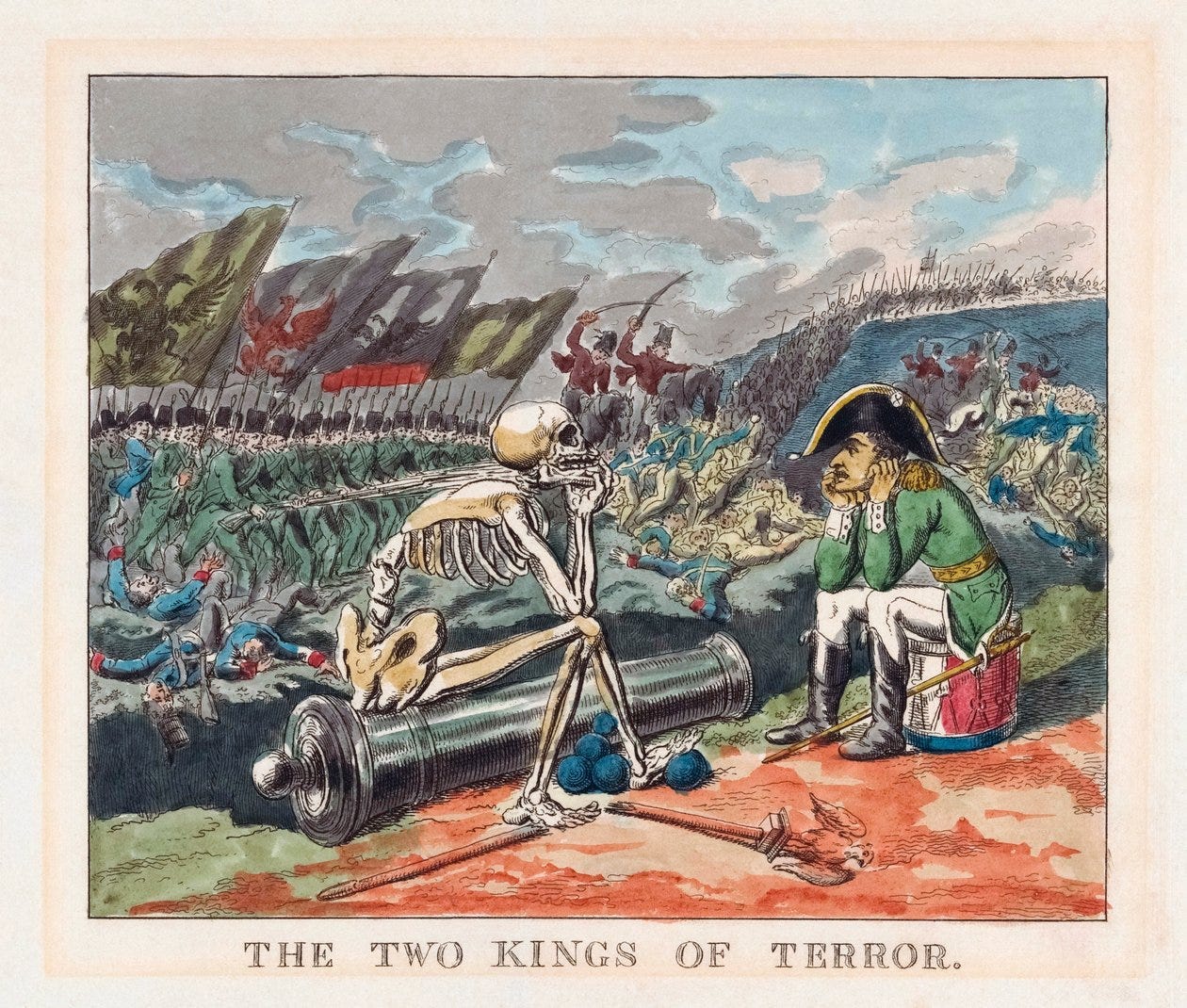
In the lottery of life, we are all born into different times. We only come to know those times through living them. Little did I know, as a toddler of two, that the first atomic bombs had just been dropped on Hiroshima and Nagasaki. Little did I know how profoundly those two detonations would shape the era I was born into.
Did the U.S. president who authorized their use weigh the morality of dropping them? Did he weigh the long-term consequences of his decision? If it was a crime, do we forgive and forget his momentary lapse in judgment? Do we call it insanity, incompetence, or just a bad day at the office?
Life might be defined as a journey from youthful innocence to hard-earned wisdom—an immutable cycle unlikely to change anytime soon. It's a somewhat tolerable reality, provided we have the right people in charge: reasonably competent, and possessing a shred of humanity— the basic requirement for any civilization; anything less leads to an early appointment with history’s trash heap.
We now have a multi-billion-dollar global tourist industry where we queue up to view the ancient ruins of former civilizations, often with little understanding of how they came to be so. To truly grasp their downfall, we must confront the inconvenient truths of our own present.
Cold War One was, in retrospect, a relative cakewalk. The two great powers formed a bipolar world, each blunting the other’s influence. There was a strange comfort in the madness of MAD—Mutually Assured Destruction. Should either side act aggressively, the other would retaliate. A tenuous standoff, but a standoff nonetheless.
That precarious peace lasted until the collapse of the USSR—a few short decades punctuated by lesser wars and minor misunderstandings. I look back on Cold War One with a certain nostalgia. Peace and security today are thoroughly relative terms—ephemeral, utterly fragile. Especially so when idiocracy prevails, as the bed of nails Western Civilization has created for ourselves.
Then came Cold War Two, and with it, the madness of a unipolar world where the crazies in the basement clawed their way to the penthouse. CWT was more ominous, clearly a precursor to even greater wars. Peace became a humiliated prelude to betrayal, and the secret bundled treacheries ushering in the next conflict.
On these lazy August afternoons we can reminisce that we survived the nuclear age. When the bombs were dropped on Hiroshima and Nagasaki 80 years ago we were actually bombing ourselves, playing with fire only intended for the gods. All these years later there have been too many bad days in too many offices, too many soured decades, and the sufferance of too many arrogant ideologies.
And so we arrive at World War Three. Not the war to end all wars. Not merely a sequel to the second. But a new kind of war—one that drags us into a netherworld of pure lunacy, idiocy, spectacle, and grotesque passivity.
The grand finale of the West is so mundane as we have bombed ourselves back to the post nuclear age seduced by our febrile follies–those feverish moments when nations, drunk on their own myths, stumble into catastrophe.
The threat of nuclear war has gone from brinkmanship to pure sociocide– the quiet dismantling of a people’s memory, our institutions, our sense of self.
It may amuse us to place power in the hands of the unprepared and the aged, but in doing so, we must ask: what does this reveal about our civic priorities, our cultural fatigue, and our appetite for spectacle over substance?
And so, these decades later, life leaves a very lasting impression—at least for the time being.
History’s Parrot is read in 38 US States and 55 countries world wide.

Thanks for reading History's Parrot! This post is public so feel free to share it. I do not use pay walls to insure content is freely available to all. Please go paid where you can.
"My dear soul, flee from the worthless, stay close only to those with a pure heart. Like attracts like. A crow will lead you to the graveyard, a parrot to a lump of sugar." ~ Rumi
Several Japanese cities were not fire bombed. Did those residents wonder why? They should have! It was about 7 cities that were spared from fire bombing, reserved to be atomic bomb victims. Why not drop the bombs on an already burnt-out and abandoned city - it would demonstrate the blast area just fine. But no, they wanted MASS DEATH along with their bomb trial, to take out as many of those dirty Japs as possible. So yes, they DID weigh the morality of the decision, and chose the Dark Side. These deaths, and the approximately 67 regime-changes enacted by The Empire remain since WW-II are a stain on all of humanity, by allowing this Bully to continue to wrack the world.
Yes...if skeletons could only talk. But would we listen???